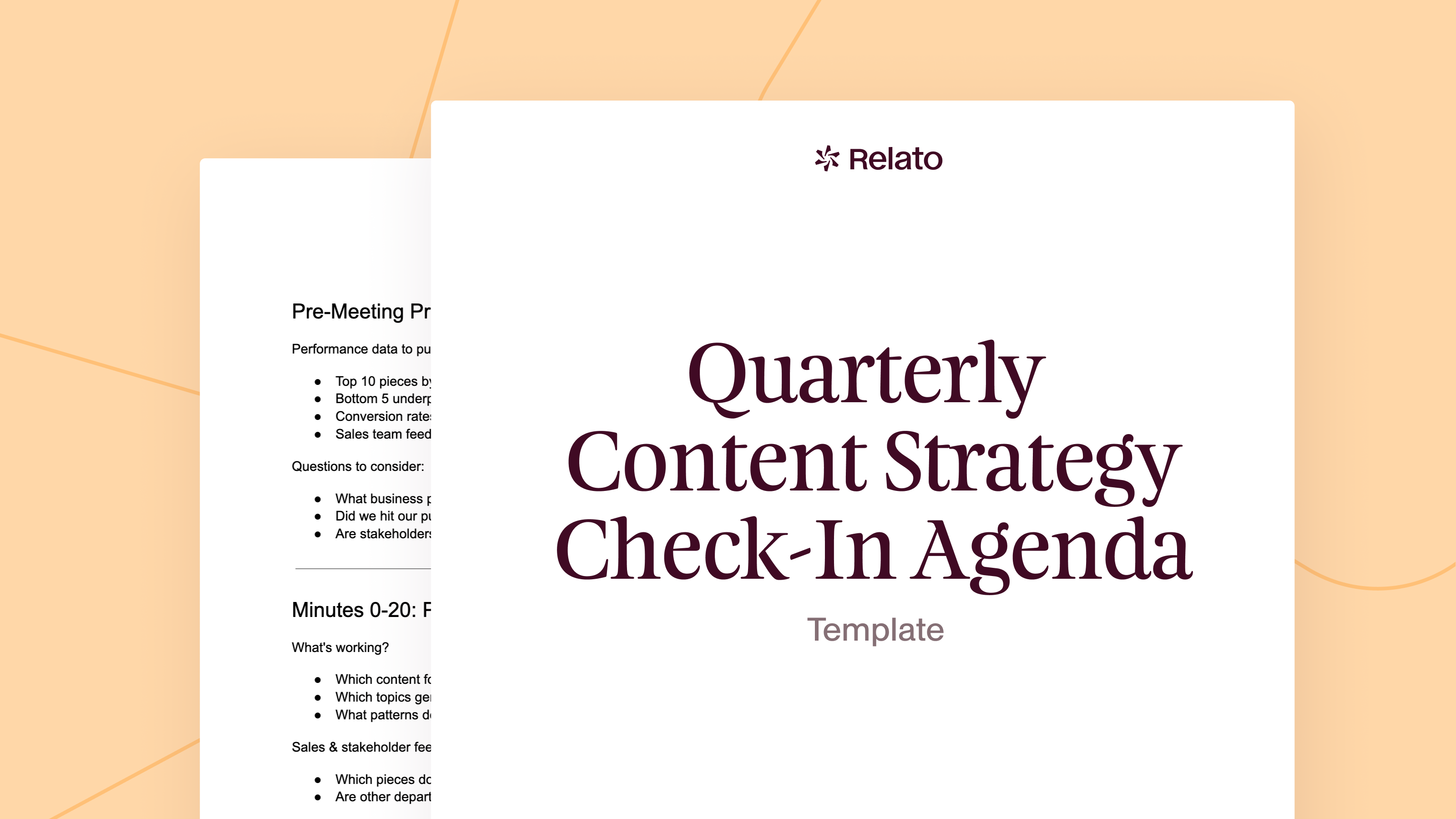
A quarterly content strategy check-in keeps your content efforts aligned with business goals and responsive to changing market conditions. Without regular reviews, even the best strategies can drift off course.
This agenda template provides a structured framework for conducting effective quarterly content strategy reviews. It ensures you cover all critical areas while keeping meetings focused, productive, and actionable.
Transform your quarterly reviews from status updates into strategic sessions that drive real content improvements and business impact.
Why use this template?
- Keep strategy relevant and responsive: Regular check-ins ensure your content strategy adapts to market changes, audience shifts, and business priorities.
- Identify what’s working and what isn’t: Analyze performance data, audience feedback, and content effectiveness to optimize your approach.
- Align content with business objectives: Ensure every piece of content contributes to broader business goals and strategic initiatives.
- Optimize resource allocation: Review team capacity, budget utilization, and content performance to make informed decisions about resource distribution.
- Set clear priorities for the next quarter: Establish actionable goals, content themes, and key initiatives based on insights and strategic direction.
This template transforms quarterly reviews into strategic sessions that keep your content strategy sharp, focused, and results-driven.
Who is this template for?
- Content strategists who need to regularly assess and adjust their content approach.
- Marketing leaders responsible for content performance and strategic alignment.
- Content managers who want to ensure their team’s efforts stay on track and impactful.
- Agency professionals conducting client content strategy reviews and planning sessions.
What’s inside?
- Performance Review Framework: A systematic approach to analyzing content metrics, engagement data, and business impact.
- Strategic Alignment Assessment: Tools to evaluate how well content supports current business objectives and market positioning.
- Audience & Market Analysis: Structured review of audience insights, competitor movements, and market trends affecting content strategy.
- Content Portfolio Review: Assessment of content themes, formats, distribution channels, and content gaps or opportunities.
- Team & Resource Evaluation: Review of team capacity, skill development, workflow efficiency, and resource allocation.
- Next Quarter Planning Guide: Structured approach to setting priorities, defining initiatives, and establishing success metrics for the upcoming quarter.
- Action Item Templates: Pre-formatted sections for capturing decisions, assigning responsibilities, and tracking follow-up tasks.
Frequently asked questions
What metrics should inform quarterly content planning?
Three categories cover most decisions: distribution metrics (impressions, organic clicks, newsletter open rate, LinkedIn engagement) to know whether the audience is growing; engagement metrics (time on page, scroll depth, downloads, replies from named ICP accounts) to know whether the content lands; and pipeline metrics (form fills attributed to content, sales-cited assets, BOFU conversions) to know whether content is contributing to revenue. Pick two or three per format, not all of them.
What should a quarterly content strategy report include?
Five sections work for most teams: performance against last quarter’s commitments, what shipped vs. what was planned, the top three and bottom three pieces by your primary measure, two or three audience or SERP shifts you observed, and the priorities for the next quarter with a named owner per priority.
What’s the role of performance data in quarterly content planning?
Performance data tells you which formats, pillars, and distribution channels are earning their cadence and which are not. It is not a kill list. Use it to ask “why” before “what next”. A pillar with declining clicks may need a refresh pass, or may need to be retired, or may have been outflanked on the SERP by a new competitor. The data starts the conversation.
How long should a quarterly content review take?
Two to three hours, agenda-driven. Longer than that and the team starts negotiating in the meeting instead of presenting decisions. Use this template to keep the agenda tight.
Who needs to be in the room?
Head of content, production lead, SEO and analytics lead, and one cross-functional representative each from marketing leadership, sales, and customer success. Not the whole content team. Smaller is faster.
Ready to streamline your content operations?
Start your free trial and see the difference.