Catch content decay and refresh old posts before your rankings slip
Relato surfaces pages that are losing traffic, turns each one into a refresh task, and runs agents that update the copy, re-check the facts, and match your brand voice. Every update lands in the project for a human to approve before it republishes.

Stop letting old content quietly lose its rankings
Without Relato
- You spot a page is down only after the traffic has already dropped
- Refreshes live in spreadsheets, scattered docs, and someone’s memory
- Updates ship with stale stats, old years, and dead links no one caught
With Relato
- Relato flags decaying pages from your search data before they crater
- Each refresh runs as a project task with a clear owner and a deadline
- A Fact-Checker agent catches outdated stats, renamed tools, and broken links first
See which pages are slipping, not just which are old
Relato reads your Search Console and analytics signals and ranks pages by lost traffic and lost positions. You start with the posts that are bleeding the most, so a limited refresh budget goes to the work that recovers the most traffic.
- Ranked by traffic and rankings lost
- Search Console and analytics signals
- Refresh the highest-impact pages first
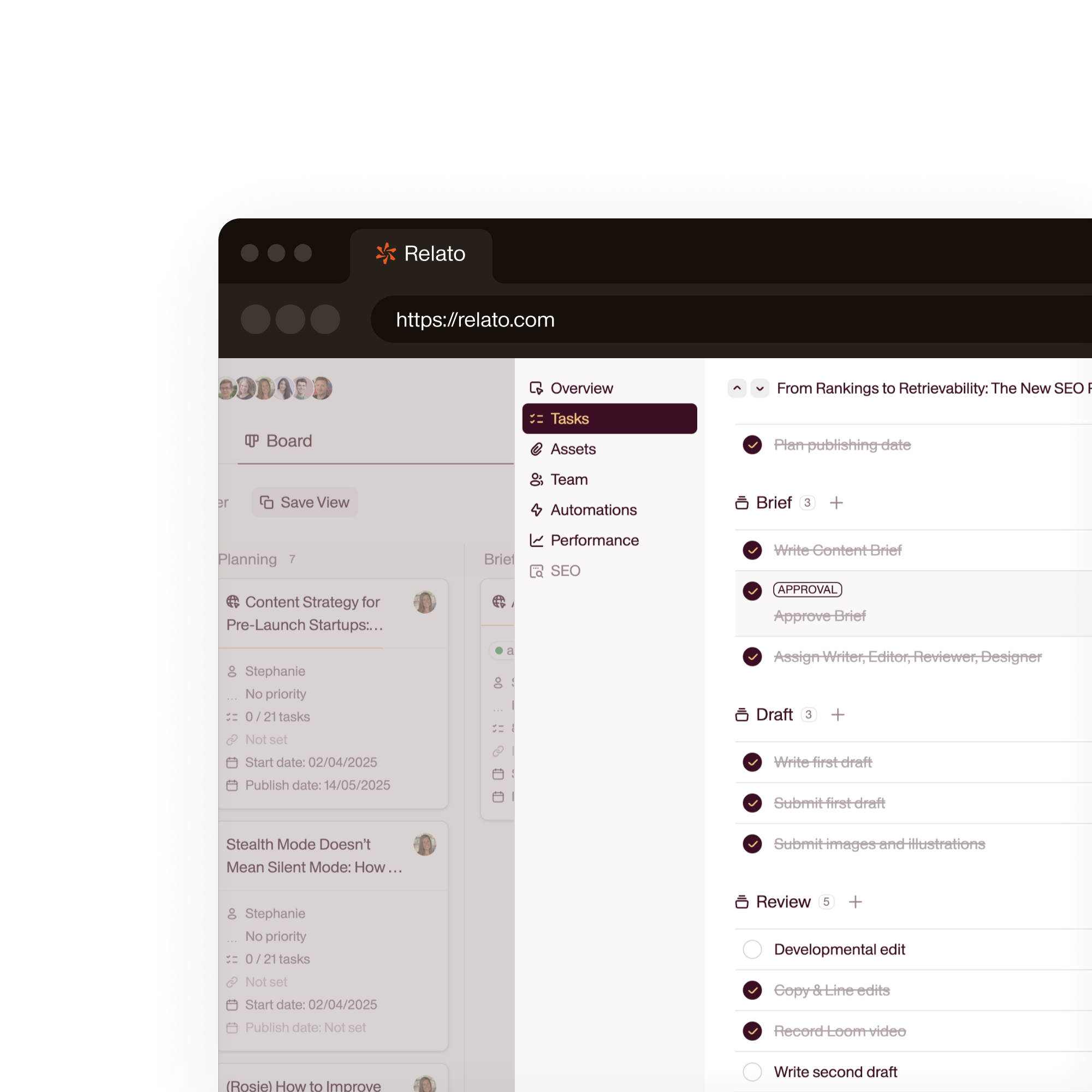
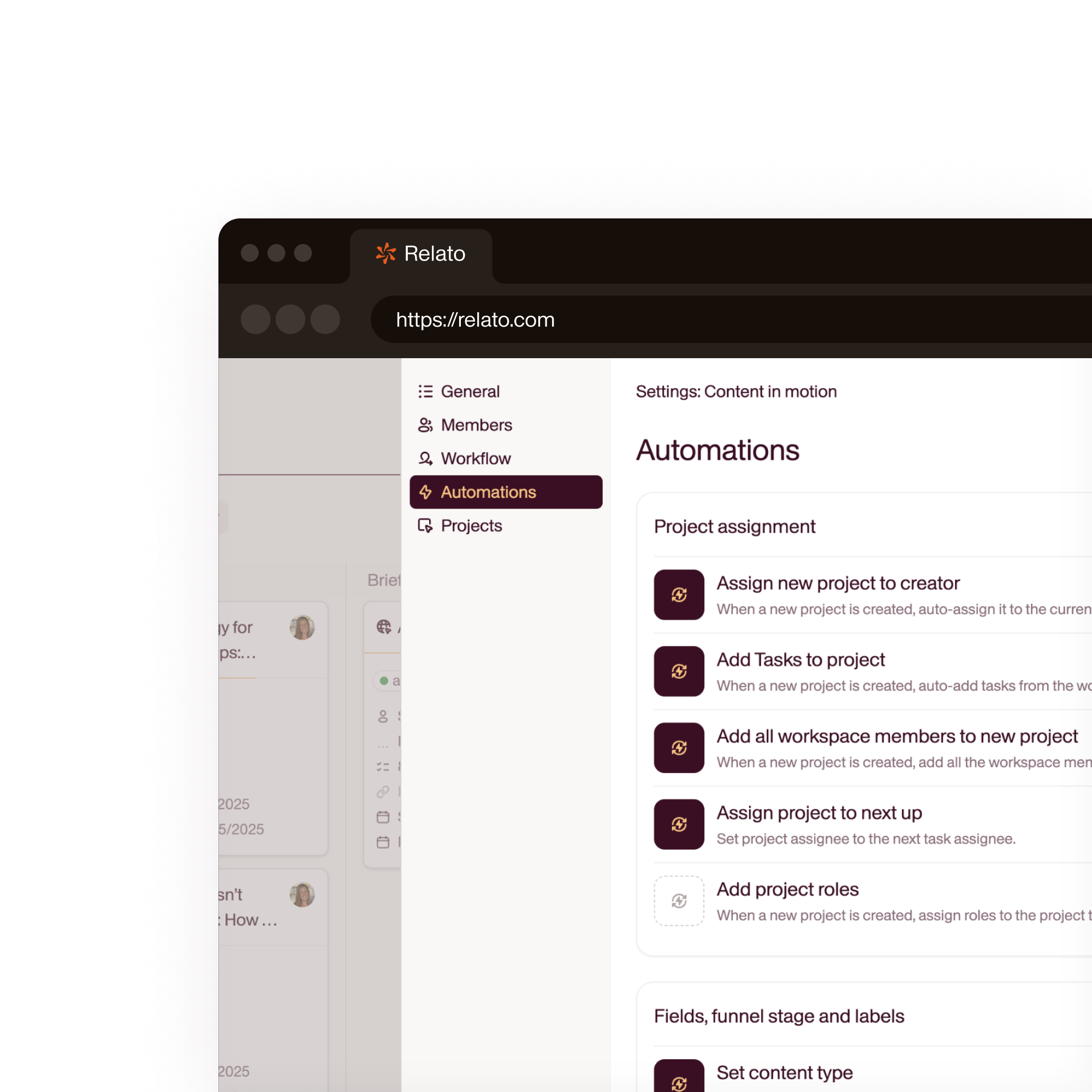
Agents write the refreshed sections, ready for review
The SEO Agent rewrites thin sections, tightens the intro, and updates the on-page targets. Every agent reads your Brand Library first, so the refreshed copy matches your voice on the first pass instead of reading like a generic rewrite.
- SEO Agent updates copy and on-page targets
- Brand voice loaded from your Brand Library
- Output lands in the project, not a chat window
Every refresh gets fact-checked before it ships
A refresh is only worth it if the new version is accurate. The Fact-Checker agent scans for stale statistics, claims tied to an old year, companies that were renamed or acquired, and links that now 404, and flags each one for the editor to resolve.
- Stale stats and old-year claims flagged
- Renamed and acquired companies caught
- Broken links surfaced before republish
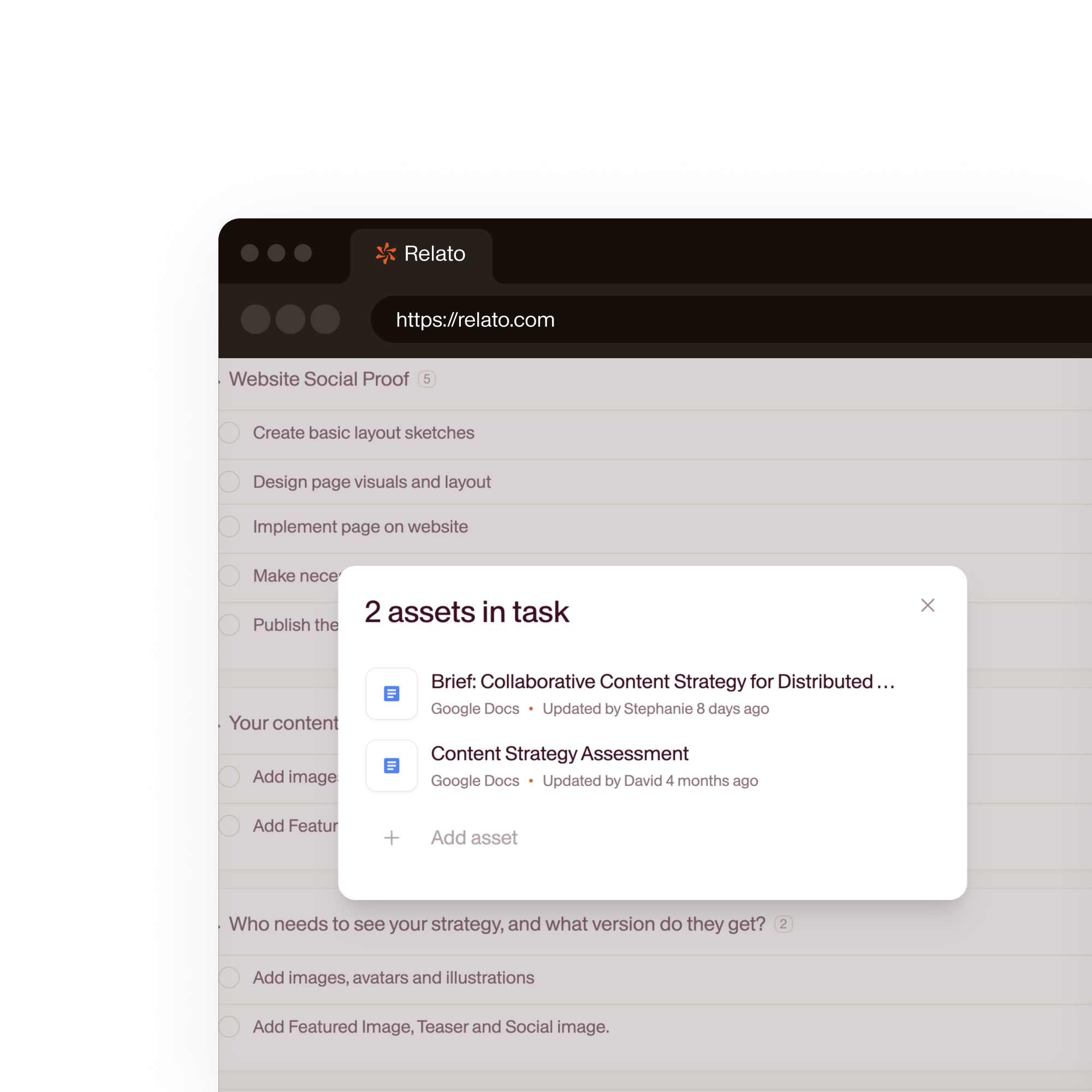
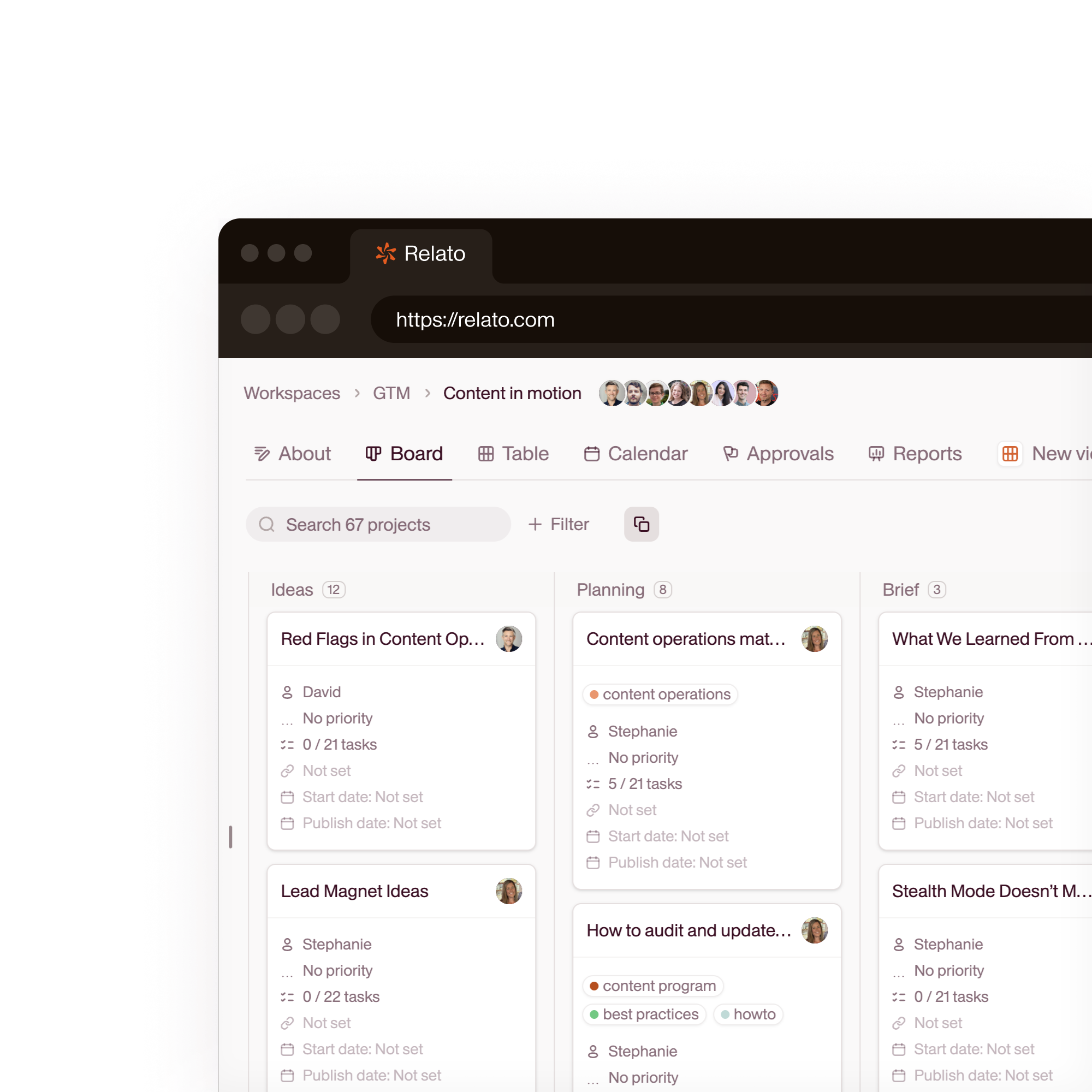
Nothing republishes without a human sign-off
Agents drop the refreshed draft into the project and mark the task for review. An editor approves, requests changes, or rejects it before anything goes live. Every run is logged with the model, the prompt, and the output, so you have a full record of what changed and why.
- Built-in approval gate before republish
- Editor keeps final say on every change
- Full audit trail on every agent run
106%
average increase in organic traffic after updating and republishing old blog posts
HubSpot
55%
weekly traffic lift reported from a single content refresh
Animalz, 2026
90.6%
of pages get no organic traffic from Google, much of it lost to gradual decay
Ahrefs
53%
higher engagement reported after refreshing existing content
WSI World
“With Relato, I feel like AI and I can actually do something pretty great together.”
 Caitlin McCarthy Messaging Strategist and Copywriter
 “Relato AI agents are a lifesaver for content marketers like us.”
 Anna Mariya Joseph Content Writer & Strategist
 How Relato compares for content refreshing
| Relato | Revive / MarketMuse / manual audits | |
|---|---|---|
| Decay detection | Ranks pages by lost traffic from your own search data | Detection only, or a manual spreadsheet audit |
| Drafting the update | Agents write the refreshed sections into the project | Gives you a score or a to-do list, not the draft |
| Fact-checking | Fact-Checker flags stale stats and dead links first | No accuracy pass on the refreshed copy |
| Brand voice | Agents read your Brand Library on every refresh | Generic rewrite with no brand context |
| Review and audit | Approval gate and full run log before republish | No native review or audit trail |
Frequently asked questions
What is a content refresh?
A content refresh is the process of updating an existing page rather than writing a new one: rewriting thin sections, replacing outdated statistics and links, sharpening the on-page targets, and republishing on the same URL. It is one of the highest-return SEO moves because the page already has history and authority, so recovering its rankings is usually faster than ranking a brand-new page.
How does Relato know which content to refresh?
Relato reads your Search Console and analytics signals and ranks your pages by traffic and positions lost over time. Instead of guessing or refreshing by publish date, you start with the pages that are decaying the fastest, so your refresh effort goes where it recovers the most traffic.
Does Relato rewrite the content automatically?
Agents draft the refreshed sections and run a fact-check, then drop the result into the project and mark the task for review. A human editor approves, edits, or rejects the update before it republishes. No refreshed content goes live without human sign-off.
Can a content refresh help with AI search and citations?
Yes. Search engines and AI answer engines both favor content that is current and accurate. Keeping your statistics, examples, and claims up to date helps you defend organic rankings and makes your pages more likely to be cited in AI-generated answers. The Fact-Checker agent is built to catch exactly the stale details that get a page passed over.
Refresh your first decaying post
Connect your content, and Relato surfaces the pages worth updating first.