The Frankenstack: How Content Teams End Up Here (and How to Escape It)
What is a Frankenstack? It is the patchwork of disconnected tools content teams stitch together because no platform was built for content operations. Where the term came from, how to spot one, and how to escape it.
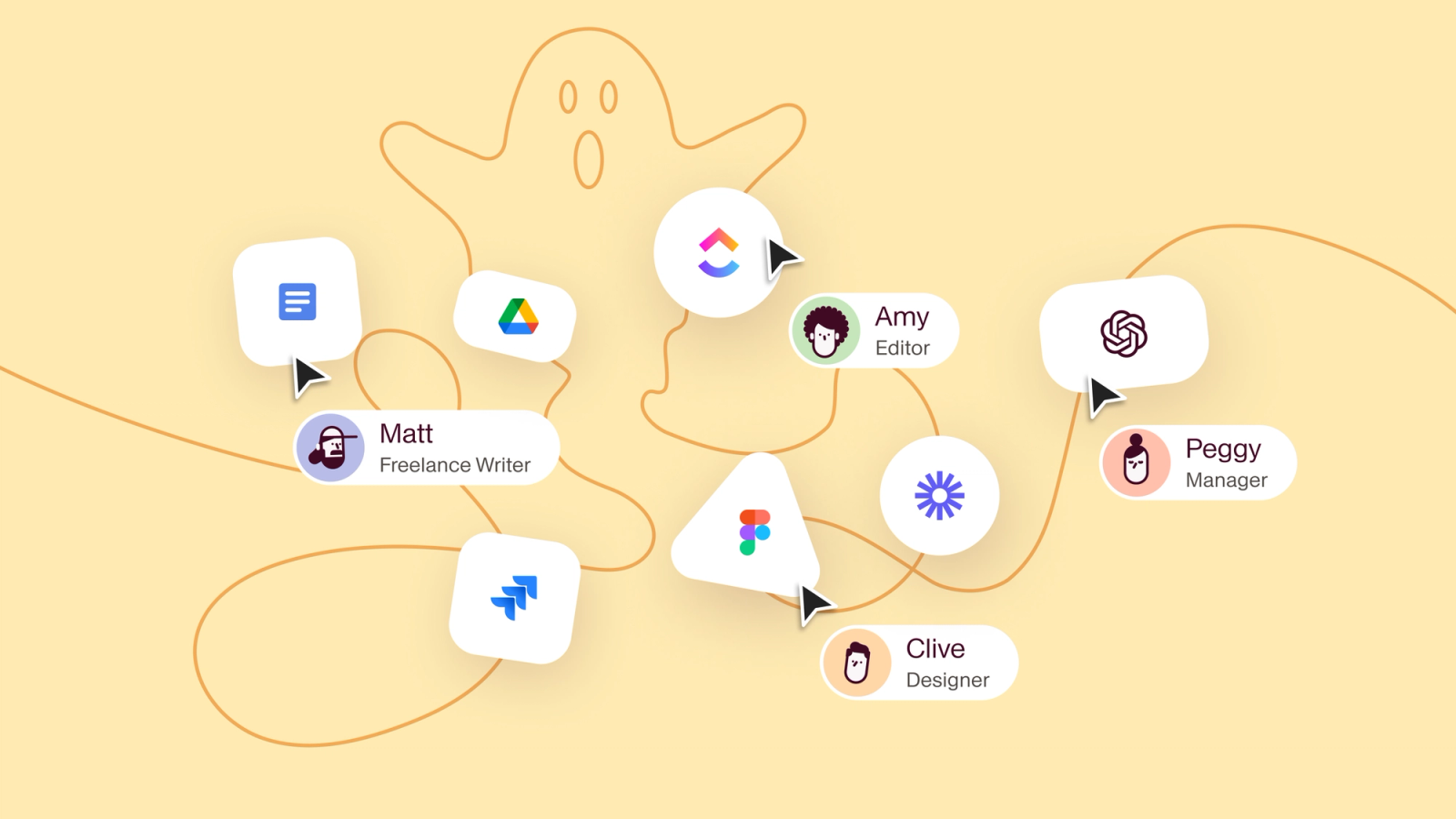


Every team has a platform, except content marketers.
Sales teams rely on a CRM. Finance has accounting software. HR has HRIS systems to manage payroll and benefits.
Content marketers? We’re left cobbling together a Frankenstack.
Nobody chose this monster. It was handed to you: a scattered workflow of Trello boards, Slack threads, Google Docs, and shared drives, none of it built for the way your team actually works. Tools designed for generic tasks forced onto a job as nuanced and creative as content marketing.
You wouldn’t expect HR to run payroll in Trello, so why are content teams managing strategy, production, and collaboration in tools that weren’t built for the job?
The Frankenstack isn’t about outgrowing tools. It’s about making do with tools that were never right for you in the first place. Instead of supporting your team, this monster makes everything harder:
Hours spent chasing feedback, files, and permissions
Tasks duplicated across three tools just to keep everyone “aligned”
Deadlines scattered in five places, and still missed
Your writers are frustrated. Deadlines slip. Content quality suffers. And somehow, you’re left holding the pieces.
This isn’t “just how it is.” It’s the monster you didn’t ask for.
It’s time to name the problem, and break free from the Frankenstack.
What is a Frankenstack? Meaning and examples
A Frankenstack is the patchwork of disconnected tools, often including Trello, Slack, Google Docs, Asana, and Notion, that content teams cobble together because no platform was built for content operations. Each piece does part of the job. None of them talk to each other, so the team spends more time managing tools than producing content.
Content teams adopted the word because the shoe fits. Sales has its CRM. Finance has its accounting suite. HR has its HRIS. Content has a project tool, a doc tool, a chat tool, a calendar, a CMS, a brief template, and a folder of freelancer email threads no one wants to touch.
A few hallmarks tell you a content team is living in one:
A draft exists in three places (Google Docs, the CMS, and a Slack message) and the team disagrees about which is the latest.
The brief template is a Google Doc copy of a Google Doc copy, with comment threads going back two years.
Onboarding a new writer or freelancer takes a day of “and here is where we keep that.”
The editorial calendar is a spreadsheet, and the spreadsheet has a column nobody trusts.
When the Frankenstack is bad enough, the team’s actual operating system is the head of content’s memory.
The Frankenstack is what happens when content teams are stuck managing their work across tools that were never built for the job. Content marketing is anything but generic, yet the tools we’re given don’t reflect that. Instead of streamlined processes, you’re stuck with a scattered patchwork of platforms, each doing a little but never enough.
As one content manager said, “No one but me knows where everything is—and I only know because of way too many late nights spent on maintenance.”
This mess isn’t your fault. You’ve been set up to fail by a stack of tools that weren’t built for the complexity of your work.
Where the word Frankenstack came from
The term came out of marketing technology, which is worth saying because the usual claim, that it started in IT or in cybersecurity, does not hold up.
The earliest clear usage we could find in print is a CIO interview with martech analyst Scott Brinker from May 2015, which described the Frankenstack as “a hodge-podge bunch of tools and data islands not integrated, not working in concert”. Brinker treats it in that interview as a label already in circulation, so 2015 is a floor rather than a birth date. Asked what a Frankenstack is, he answers: “It’s become a humorous label.”
The cybersecurity association is a coincidence of naming. In 2017 a team at the NATO Cooperative Cyber Defence Centre of Excellence published a paper on a monitoring framework they built and called Frankenstack, used to give red teams real-time feedback during the Crossed Swords exercise. That is a product name someone chose on purpose, two years after the martech usage, not the origin of the insult. Several write-ups cite it as the source anyway.
No individual is reliably credited with coining the word, and we would be inventing a story if we named one. What is clear is that the word spread through conference talks and blog posts rather than through anything official, which is why the spelling never settled. Frankenstack, franken stack, and Frankenstein stack all mean the same thing. Frankenstack as one word is the most common form in marketing writing, but nobody will correct you for the other two.
What the Frankenstack looks like
A day inside the Frankenstack is draining. Here’s what it looks like:
Strategy assets? Good luck. Buyer personas buried in folders you forgot existed. Tone of voice docs with names like ‘_FINAL(8).’ You waste hours searching for what should be at your fingertips.
Too many ‘request for access’ emails. You finally locate the draft, then spend hours waiting for permission to view it. Progress stalls.
Double work. Tasks get copied into Trello, Notion, and Google Sheets, and updates inevitably fall through the cracks.
Context switching kills focus. You bounce between Slack, Asana, Drive, and email just to answer basic questions.
Misaligned work. Sales can’t find the battle cards they need. Product teams are still waiting for launch content.
The tools aren’t helping, they’re hurting. And as one creative director shared, “Other tools make you build everything from the ground up. I don’t want to do that work.”
When workflows break, everyone feels it
Content marketing fuels every part of the business:
Sales enablement. Battle cards and one-pagers help close deals faster.
Product launches. Email sequences and activation content drive adoption.
Customer success. Case studies and onboarding guides keep customers engaged.
But when workflows break, none of that happens. Sales teams can’t find what they need. Product teams miss deadlines. Customer success struggles to deliver materials.
Leadership? They see the missed opportunities but not the endless hours you spent trying to make it work.
As one overwhelmed writing team manager put it: “We do this manually now, and sometimes it’s months until we notice that person still has access.”
Without a common platform, it’s harder for content teams to prove ROI or demonstrate value as a growth driver.
Who lives in the Frankenstack?
Content managers
You started small. You had one or two freelancers, a Google Doc for briefs, and a Trello board to track progress. Then you scaled.
Now, you’re tracking multiple content programs across multiple tools. Briefs live in Notion. Edits happen in Slack. Deadlines are in Asana, until someone forgets to update the board.
You wanted to manage strategy and create great content. Instead, you’re a full-time project manager chasing down updates.
Freelance writers
You’re pulled into everyone else’s Frankenstack. One client uses Airtable. Another demands updates in ClickUp. There’s always a Slack channel you’re supposed to “check regularly.”
It’s confusing. You spend as much time managing platforms as you do writing content. And when the system falls apart, deadlines slip, and trust breaks down.
Agencies
Your team runs client work through a different Frankenstack for every account. There’s no standard process, so onboarding a new freelancer or editor takes days. You’re constantly playing catch-up, and good writers leave because the work is too messy. It is the exact trap Kalyna Marketing escaped by running every client through one shared workflow.
When tools multiply, chaos grows.
Why the Frankenstack doesn’t work
The Frankenstack isn’t a solution. It’s what happens when your tools aren’t built for the way content teams actually work.
Content feeds a lot of channels at once:
Blog posts
Customer emails
Sales enablement docs
Onboarding videos
Social content
Managing all of that requires strategy, alignment, and execution across teams and contributors. The hard part is turning the strategy into a system the team can run every week, which is the difference between a plan and a content strategy that gets operationalized. But generic tools create silos instead of solving workflows.
That’s already complex. And when your tools don’t connect, everything falls apart.
A typical content program involves dozens of stakeholders, tools, and deadlines. When even one piece of the puzzle falters, the entire process grinds to a halt.
Here’s how the Frankenstack sabotages your team:
No unified view. Strategy assets like buyer personas, tone of voice docs, and campaign plans are scattered across email threads, old folders, and outdated tools. No one knows where anything is, except for the person burning late-night hours to keep track.
Access roadblocks. “Request for Access” emails pile up while progress stalls. Drafts and files sit locked away behind permissions chaos.
Tool overload. Updating tasks across Asana, Trello, and spreadsheets. Edits in Slack and Google Docs. Nothing connects, and the frustration of doing the same work twice keeps piling up.
Misaligned production. Sales teams can’t find the battle cards they need. Product launches miss deadlines. Customer success is stuck waiting on onboarding materials.
Burnout everywhere. Writers scramble to meet deadlines with incomplete briefs. Freelancers juggle disconnected tools for every client, and both tool overload and permission chaos rank in the top ten pains freelance content marketers report. One freelancer put the cost plainly when we asked what their bench wished clients knew: every extra login is unpaid admin. Leads waste time chasing clarity instead of driving strategy.
The Frankenstack isn’t a minor inconvenience. It’s a major roadblock.
The result? Everything slows down.
You have less time to focus on strategy
Your energy for creativity gets zapped
High-quality content production slows to a crawl
The Frankenstack kills momentum, burns out your team, and makes it impossible to scale content as a growth driver.
Escape the Frankenstack.
Relato replaces the duct-taped tools with one platform built for content teams.
The cost of a scattered workflow
The cost of the Frankenstack goes beyond wasted time. Like the other hidden costs of content friction, it impacts the entire organization:
No North Star direction
Your strategy assets (buyer personas, tone of voice docs, campaign plans) are scattered across email threads and old folders. Finding what you need takes hours. And good luck explaining where everything lives to your team.
One manager shared: “We had a new freelancer starting on a big launch campaign. I spent an hour trying to find the buyer persona deck, only to realize the ‘latest’ version was from 2018.”
Broken collaboration
Content teams today are remote-first. In-house teams, agencies, freelancers, and fractional talent all need to work together, and aligning a distributed content team is harder than aligning a co-located one. But when tools don’t connect, collaboration breaks down.
Multiple Slack threads for feedback on one blog post.
“Request for Access” emails piling up all week.
Writers lose track of edits because feedback lives in five different places.
It’s exhausting. And good freelancers leave because the process is too messy.
Alignment falls apart
Content teams do more than create blog posts. You’re producing assets for sales enablement, product launches, customer onboarding, and more. Without a unified system, aligning content production with the needs of other teams becomes impossible.
Sales can’t find the battle cards they need.
Product teams miss their launch dates because content is delayed.
Customer success can’t deliver onboarding videos because edits are stuck in feedback purgatory.
Leadership starts asking why content isn’t driving more results. You know the answer: your tools are holding you back.
None of that is a content problem. It is a plumbing problem, and without a platform designed to scale content operations the plumbing keeps failing in the same places.
To break this cycle of misalignment and mayhem, content teams need what every other department already has: a system of record.
The system of record for content marketing
Every team in modern business has a system of record, the authoritative data source for their work.
Sales relies on the CRM to manage leads, opportunities, and pipeline.
Finance uses accounting software to track transactions and compliance.
HR runs on HRIS platforms to manage employee records and payroll.
The Frankenstack leaves content teams without a system of record, meaning a centralized, authoritative hub for their content strategy, assets, and workflows.
Relato changes this.
Relato acts as the system of record for content marketing. A system of record is an authoritative hub that centralizes and validates your data. It’s where content teams can rely on a single platform to store, manage, and access assets, workflows, and strategy, all without chasing files or wondering which version is the latest.
All your assets, up-to-date and enriched with metadata, live in The Library.
Workflows are managed through Shared Workspaces, keeping teams aligned and moving forward.
Projects and tasks stay organized, ensuring nothing falls through the cracks.
Content teams finally have what every other department already relies on: a single, reliable home for content strategy, workflows, and assets. Everything you need, all in one place.
You can see it on a demo rather than take our word for it.
How many tools is too many?
People ask this expecting a number, and the honest answer is that the published benchmarks are too far apart to give one.
Pick up three 2026 vendor reports and you get three different worlds. BetterCloud’s State of SaaS puts the average portfolio back on the rise after two years of consolidation, up 11% year over year, with mid-market organisations jumping from 116 to 164 apps. Zylo’s SaaS Management Index says the average company manages 305 applications and that counts were essentially flat. Torii’s benchmark says 831, on the argument that most studies undercount because they only see what procurement touched, and that around 61% of apps arrive through browser activity and direct signups instead.
Those are not small disagreements, and they are not really about software. They are about what each vendor can measure and what each one sells. Treat any single figure you see quoted as a headline rather than a fact about your team.
Which is fine, because the count was never the useful test. Two questions are:
Is the same fact stored in more than one place? A deadline that lives in Asana and in a spreadsheet gives you one real record plus a reconciliation job that somebody performs by hand, forever.
Can a new person find the current version without asking? If onboarding a freelancer requires a walkthrough of where things are kept, the map is in someone’s head, and a map in someone’s head is the single most fragile part of any stack.
A team running four tools that pass state cleanly is in better shape than a team running four tools that each hold a partial copy of the truth. Count reconciliation work, not logins.
How to fire your Frankenstack: a four-step escape
“Fire your Frankenstack” is what content leads start saying after the third tool audit in a row. The phrase is shorthand for the moment a team stops adding patches and starts replacing the patchwork with one purpose-built system. Here is the order that actually works.
1. Inventory the mess. Open a sheet, list every tool the team touches in a week, name the owner, and tag what each one is used for: strategy, brief, draft, review, publishing, reporting. Most teams find seven to twelve tools doing the work of two or three. Some are paid for, some are not. Half the fields are duplicated.
2. Pick the system of record. Decide where the authoritative version of a brief, a draft, a calendar entry, and a final asset lives. One per artifact. If two tools claim the same job, one wins and the other gets retired. This is where most teams stall, because retiring a tool means telling the person who chose it that the choice did not survive. Do it anyway.
3. Migrate, do not bridge. Bridges like Zapier, n8n, and Make feel cheap, but they create the next Frankenstack. They keep both tools alive and add a third layer of state to debug. Move the work into the system of record and switch the old tools off, even if it costs you a sprint. For a longer look at why bridging fails for content teams, see our breakdown of n8n alternatives and Zapier alternatives.
4. Lock the door behind you. A Frankenstack regrows in weeks if no one owns the stack. Name a stack owner, write a one-page tool policy (new tools need approval from X and a 30-day review), and revisit the inventory every quarter. Naming that person is its own piece of work, and it goes better when you have already settled who owns what in the content process. Migration day is the middle of this job rather than the end of it. The end is the day the team stops reaching for a new tool by reflex.
This is how teams move from a Frankenstack to a content operations system that actually scales, and how they avoid the content decay that scattered ownership creates. At a certain size the coordination stops fitting around someone’s existing job, which is the point teams start hiring a head of content operations to own it outright.
Does the same sequence work outside content marketing?
Mostly, yes. A steady trickle of people land on this page asking about retail systems and other non-marketing stacks, which suggests the word has outgrown the department it came from. The four steps are not content-specific: inventory, choose one system of record per artifact, migrate rather than bridge, then appoint an owner. That order holds anywhere a stack grew by accretion.
Two things do change outside marketing. The migration is harder when the data is transactional, because orders and payments cannot be double-entered during a cutover the way a draft can sit in two places for a week. And retiring a tool is harder when it has an external dependency, such as a vendor integration or a compliance requirement, since the decision is no longer only yours to make.
We write from content operations, so read the examples here as one department’s version of a general shape, not as a plan for consolidating an ERP.
There’s a better way
The Frankenstack feels inevitable. It’s what happens when you try to scale content production without a purpose-built platform.
But content teams deserve better.
Instead of cobbling together 12 disconnected tools, consider a purpose-built content operations platform designed specifically for content workflows, not retrofitted from general automation tools.
With Relato, you can finally manage all your content projects in one place, not all over the place.
The Library: Your team’s single source of truth. Searchable, organized, and always up to date.
Shared Workspaces: Custom-built workflows that align your team, keep projects on track, and make collaboration seamless. No more confusion about who’s doing what.
Projects and Tasks: A structured way to manage content initiatives, from ideation to publication. Assign tasks, track deadlines, and keep content in motion.
AI Agents built for content operations: Ready-to-run or create your own no-code AI agents that operate in your workspace, know brand and writing guideline, and work inside your workflows.
Two reactions from content leads who’ve seen it:
“I’ve never seen anything like this before, and it’s blowing my mind.” A head of content drowning in Google Sheets
“If you have an editor and a writer and then the creative director… they can all stay within the same workspace.” A content manager with Asana PTSD
If that sounds like your week, book a demo and bring your messiest workflow to it.
Why now?
Content marketing isn’t slowing down. B2B SaaS teams are producing more content than ever, and the buyer journey is growing longer and more complex.
Meanwhile, teams are leaner and rely heavily on freelancers and agencies. Without a unified platform, you’ll keep struggling with missed deadlines, scattered workflows, and unclear impact.
It doesn’t have to be this way.
The time for a better way is now.
What happens when content operations work
Here’s what life looks like without the Frankenstack:
Writers access the latest briefs, strategy docs, and assets instantly.
Freelancers focus on content, not tools.
Content leads drive strategy, not updates.
Teams deliver high-quality content on time, every time.
Content marketing drives results. With Relato, you can prove it.
Your content workflow shouldn’t be a monster
The Frankenstack has held you back long enough. Relato replaces it with one platform that connects your strategy, workflows, and assets, so your team can create great content and drive growth.
Ready to break free from the Frankenstack? Get a demo today, because your team deserves better.
Frequently asked questions about the Frankenstack
What is a Frankenstack?
A Frankenstack is the patchwork of disconnected tools, often including Trello, Slack, Google Docs, Asana, and Notion, that content teams cobble together because no platform was built for content operations. Each piece does part of the job. None of them talk to each other, so the team spends more time managing tools than producing content.
What does Frankenstack mean for content teams?
For content teams, Frankenstack means the daily friction of running strategy, briefs, drafts, edits, and approvals across five or more tools that were not designed to share state. Drafts fall out of sync, deadlines live in three places, and the only person who knows where anything is is the one who built the workarounds.
How do you fire your Frankenstack?
Inventory every tool the content team uses, pick a single system of record for strategy, briefs, drafts, and assets, migrate the work into it, then retire the old tools. Name a stack owner so the patchwork does not regrow. The hardest step is retiring the tools, because each one has a champion who chose it.
Why do content teams end up with a Frankenstack?
Because no category of tool was built for content operations the way CRMs were built for sales or HRIS systems were built for HR. Content leads inherit project tools designed for engineering or generic work management, then layer briefs, calendars, and writer comms on top. Each layer adds another tab, and the stack grows by accretion, not by choice.
What tools usually make up a Frankenstack?
A typical Frankenstack mixes a project tool (Asana, Trello, ClickUp, Monday), a doc tool (Google Docs or Notion), a chat tool (Slack or Teams), a calendar (Google Calendar or a spreadsheet), a brief template (Google Doc or Airtable), a CMS, and a smattering of point tools for SEO, AI writing, and reporting. Plus the freelancer email thread no one wants to admit is still load bearing.
How is a content operations platform different from a Frankenstack?
A content operations platform holds strategy, briefs, calendars, drafts, reviews, and assets in one schema, with one permission model and one notification stream. A Frankenstack is what happens when those jobs live in different products with different schemas. The platform reduces context switching and gives leadership a single view of the program. The Frankenstack hides that view behind seven logins.
Where does the term Frankenstack come from?
It comes from marketing technology, not from IT or cybersecurity. CIO published an interview with martech analyst Scott Brinker in May 2015 that used Frankenstack for a hodge-podge of tools and data islands that are not integrated, and Brinker described it there as already a humorous label, so it was in circulation before that. A separate 2017 academic paper from the NATO Cooperative Cyber Defence Centre of Excellence named an open-source monitoring framework Frankenstack, which is a tool name rather than the origin of the insult. No single person is reliably credited with coining the word.
Is a Frankenstack the same as a franken stack or a Frankenstein stack?
Yes. Frankenstack, franken stack, and Frankenstein stack all describe the same thing: a stack assembled piece by piece from tools that were never designed to work together. The spelling is not settled because the word spread through conference talks and blog posts rather than through any standards body. Frankenstack as one word is the most common form in marketing writing.
How many tools does it take to count as a Frankenstack?
There is no threshold, and the published benchmarks disagree too much to supply one. Vendor reports in 2026 put the average company somewhere between roughly 106 and 831 applications depending on whether the count includes only what procurement approved or everything discovered through browser activity and direct signups. Count is the wrong test anyway. The test is whether the same fact, such as a deadline or which draft is current, is stored in more than one tool and has to be reconciled by a person.
Escape the Frankenstack.
Relato replaces the duct-taped tools with one platform built for content teams.